HIGH
POWER ACTIVITIES
|
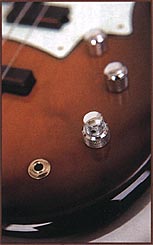
Both P and J models get
a flexible but easy to use on-board pre-amp system linked to
the Hyperactive pickups. The use of a pair of 9 volt batteries
gives lots of clean headroom, making these basses a dream to
record with and the variety of tones that can be pulled from
the instrument is very welcome. The treble/bass, cut/boost stacked
pot is the key to the tonal response of the basses and it's best
used with a degree of restraint - there's an awful lot of power
available and it's tempting just to crank everything up, but
some great sounds lie away from the extremes of the pot's range.
|
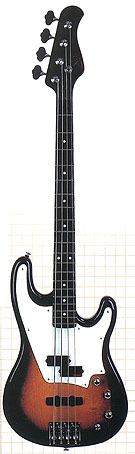 Retro-Active
- P
Retro-Active
- P |
The Lowdown
Status Retro-Active-P
and Retro-Active-J
Built in the U.K.
Technical Spec:
Scale length : 864mm (34")
Nut width :
Classic P = 42mm
Classic J = 39mm
Neck/body joint : Bolt-on
Woods :
Body = Alder
Neck = Woven graphite
Fingerboard : Phenolic
Electrics :
Pickups :
P = Status Hyperactive split-coil
(Additional J pickup as a custom option)
J = Status Hyperactive hum-cancelling
Controls :
Master volume (push/pull passive)
pickup blend, stack treble/bass,
Hardware :
Bridge - Solid brass, chrome
Tuners - Gotoh open-backed
Options :
Finishes - Black, ivory white,
sonic blue, Tobacco sunburst,
cherry sunburst.
Plain or lined fretless.
|
|
|
IN USE
Even idle unplugged noodling on this pair reveals a consistency
that exceeds that of most all-wood instruments and there's a
bright, lively, articulate edge to their general tonal character
It's particularly pronounced where the J is concerned - this
bass serves up a particularly poised blend of controlled lows,
smooth mids and crisp high-end. The P shares the J's definition
but allows for a little extra darkness and fullness at the bottom
end and the result is an instrument that's a little bigger and
warmer-sounding. Plug in and the differences between the two
remain, although thanks to the powerful 2-band EQ there's a great
level of control available as far as tonal tailoring goes. The
P proves to be a versatile all-rounder - fat, throbby dub lines
are possible with the front pickup only, plenty of lows rolled
in and the treble wound off and, at the other extreme, a punchy
solo tone presents itself from the rear pickup alone. The J is
more mid-rangey and muscular and best-suited to taut, clean funk
or pop and, indeed, electric jazz. The bass's twin singles are
pokey and round but retain a good degree of clarity.....great
for the studio. The playability factor of both instruments is
sky-high. Don't make the mistake of thinking that the use of
graphite for the necks makes for a cold, unforgiving playing
experience - it doesn't. In fact the well-proportioned necks
feel fabulous and playing them is addictive, possibly because
their even response flatters your playing to such an extent.
And we all know that flattery will get you everywhere...
CONCLUSION
Plenty of bass players will be quite happy to stick with traditional
versions of the basses that have inspired Status's Retro-Active
P and J models. But, given that bassists tend to be a little
more adventurous than their 6-string cousins, there will equally
be a good proportion for whom these two will be of enormous interest.
Near faultless build quality, great finishing, fabulous electrics
and hardware and an all-round sound concept make the these basses
hugely credible, desirable basses for those with a penchant for
well-executed trad/modern mixes. The degree of customisation
offered is yet another reason to check them out, as if you should
need one...
Guitar Buyer
Rating :

|